
Brazilcore in Europe: Fashion as a medium for Cultural Relations
This interactive article examines how fashion can function as a medium of cultural relations through the case of Brazilian fashion’s dialogue with the European cultural scene.
In the past few years, Brazilian cultural references have increasingly appeared in global fashion. Football shirts, Havaianas flip flops, bikinis and colorful aesthetics were associated with Brazilcore, quickly gaining the status of a global trend. The phenomenon points to fashion's ability to make a country's culture visible worldwide.
Clothing, accessories and footwear function as mediums through which cultures are represented, carrying meanings about identity, heritage and social values. The circulation of fashion, therefore, creates encounters between diverse cultural contexts and can form spaces for dialogue, collaboration and exchange, with potential to contribute to international cultural relations.
With one of the world's largest fashion markets and a distinctive creative industry, Brazilian fashion has developed through the interaction of Indigenous, African, European and other cultural influences. The country's fashion scene provides, by itself, an example of how cultural identity can be expressed through clothing while also being shaped by transnational exchanges. But the current dialogue between Brazilian fashion and diverse European countries offers a particularly interesting case through which to examine this potential, as Brazilian designers increasingly participate in international fashion networks, collaborations and other initiatives.
A history of colonialism and influences
The colonization process throughout the 16th and 17th centuries introduced Portuguese, French and Dutch influences, while slavery brought in cultural practices from diverse African regions that resisted and continue to shape Brazilian fashion to this day.
With the arrival of the Portuguese royal family in the early 19th century and Brazil’s elevation to the status of a kingdom, ports were opened for trade, whilst investment was made in urban development and in the arts. As a result, a strong British influence emerged in commerce, alongside a French influence in the arts.
Despite the centuries of history, fashion as an organized, commercial activity only emerged in Brazil in the 20th century with the arrival of new immigrant groups, such as Syrian and Lebanese, traditional traders in textiles, clothes and accessories.
With the world depression and the World Wars, Brazilian industry was stimulated to produce clothes. However, until the 1950s, Brazilian fashion was still being set by European trends and ateliers were concentrated in Rio de Janeiro and São Paulo.
Until the beginning of the 1990s, Brazil’s clothing production was mainly aimed towards the internal market, but with the end of import restrictions, Brazilian fashion went through a profound change during the last decade of the 20th century. Faced with competition from the imports from the United States and Europe, specialization in the Brazilian fashion industry became increasingly urgent.
Globalization and the internet have made the threads of influence much more fluid and scattered, but the main fashion influences remain concentrated in the Global North.
Brazilian fashion has also had influences from the different regions within the country, and its attitude towards ecology and sustainability changed over the years.
Since the 1980s, a growing number of hand-made artisan cooperatives have been set up in poor communities, not only in the South-eastern region, but also in the North and North-east, gaining relevance among designers and brands all over the country.
Due to the destruction and risk faced by the Amazonian and other local environments, designers and stylists, as well as the final consumers, have been increasingly looking for ecologically responsible and ethical production in the fashion industry.
Events like the Year of Brazil in France in 2005 and the World Football Cup in 2014 helped put Brazilian fashion on the map.
Over the last two decades, the São Paulo Fashion Week (SPFW) has risen to the most important fashion event in Latin America and is on the international agenda next to other relevant cities, such as Paris, Milan and New York.
More recently, the growing appreciation of Brazilian lifestyle and its fashion designers has been of great value to Brazil's positive image abroad.
Fashion as a medium for cultural relations, a few examples
While Europe has historically been the main influential force when it comes to fashion in the Western world, for the last few decades Brazilian culture has been showcased and promoted through fashion shows and collaborations all over Europe. Although currently relying mainly on partnerships formed in the private sector, the use of fashion as a medium for cultural relations has been proving fruitful as aesthetics and lifestyle, as well as brands and designers themselves, get more and more traction and visibility in the European continent.
If on one hand Brazilian brands and organizations invest in collaborations and events to showcase its diverse fashion industry and sustainable production to the European market, European organizations, on the other hand, are also interested in raising awareness about their national industries, focusing on portraying the tradition and quality of their garments.
A case of intercultural, sustainable collaboration
The label SICA, founded by Brazilian fashion designer Simone Simonato, started with a focus on creating distinctive clothing and accessories from colored textile waste from local factories in southern Brazil. In 2013, SICA expanded to Bangladesh and Berlin with the line Proudly Made in Bangladesh, which outsources textile scraps from the Bangladeshi finished goods and garment industry (RMG) and places them in the hands of artisans in rural Rangpur, working with them to explore ways of creating fairer jobs and develop the workers' skills.
The purpose of the brand in Berlin is to both make Bangladeshi handicrafts visible in the European market and to network and collaborate with the city’s growing community for sustainable design.
In 2022, Simone Simonato partnered with Dhaka-based Mahenaz Chowdhury to create a documentary addressing the deteriorating conditions of the rivers in Bangladesh. Part of the project Goethe Pop Up, organized by the Goethe-Institut in Bangladesh, the initiative shows how cultural exchange and sustainability can walk hand-in-hand with ethical design and multimodal artistic endeavours.
Recommendations for the use of fashion in cultural relations
While the EU’s cultural relations emphasises dialogue, diversity and collaboration, fashion remains underused as a medium at the EU level, despite the historical international visibility of European fashion. As a highly visible form of cultural expression, fashion can communicate ideas about identity, heritage, creativity and contemporary society while creating opportunities for dialogue between European and international audiences.
While Brazil presents a diversity of initiatives regarding the showcase of its brands and designers in Europe, even if mainly led by the private sectors and independent initiatives, we were not able to identify clear EU-level fashion initiatives. There is, therefore, significant potential for the EU and its Member States to further develop this field within the realm of international cultural relations.
Recommendations for EU institutions to promote fashion as vehicle for international cultural engagement:
Recognise fashion as a legitimate instrument of international cultural engagement, alongside more established fields such as cinema, music, literature and the visual arts, expanding the reach of cultural initiatives to audiences beyond traditional cultural institutions.
Develop programmes inspired by existing Member States initiatives, such as the Italian Fashion Days in the World. Initiatives showcasing designers from different European countries would have the potential to create opportunities for less internationally visible Member States and designers to participate in international cultural engagement, while reinforcing the EU's image as a space of cultural diversity.
Recognise and engage the private sector as a cultural-relations actor. Fashion brands, retailers and other industry networks are, in some cases, already acting as informal cultural relations actors through collaborations and exchanges. While requiring a careful balance between cultural diplomacy and commercial interests of companies, partnerships with the private-sector could allow its networks, expertises and audiences to be used as resources for international cultural engagement.
Support long-term educational and professional exchanges between European and international fashion institutions, creating spaces for mutual learning and collaboration through programmes such as residencies, joint workshops, collaborative collections and research projects.
Take advantage of the high visibility of major international Fashion Weeks to organise complementary cultural programming focusing on bringing together European designers, local creative communities, cultural organisations and audiences to transform Fashion Weeks from a primarily commercial event into an opportunity for broader cultural exchange.
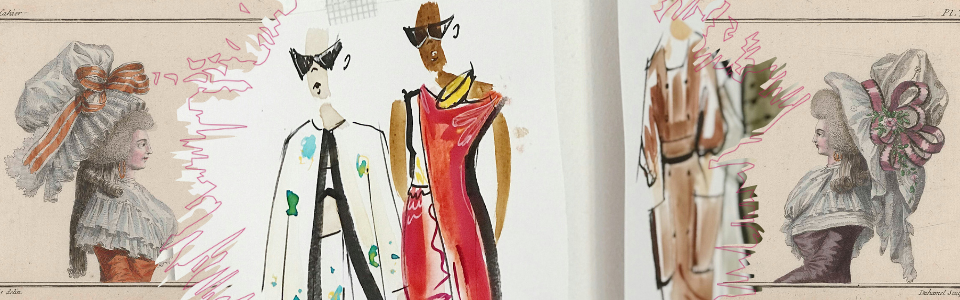
Top image credits: Left: The First Fashion Magazine by vermeld op object, Rijksmuseum / Middle: photo by Charlota Blunarova on Unsplash/ Right: The First Fashion Magazine by vermeld op object, Rijksmuseum.
The views expressed in this article are personal and are not the official position of culture Solutions as an organisation.