
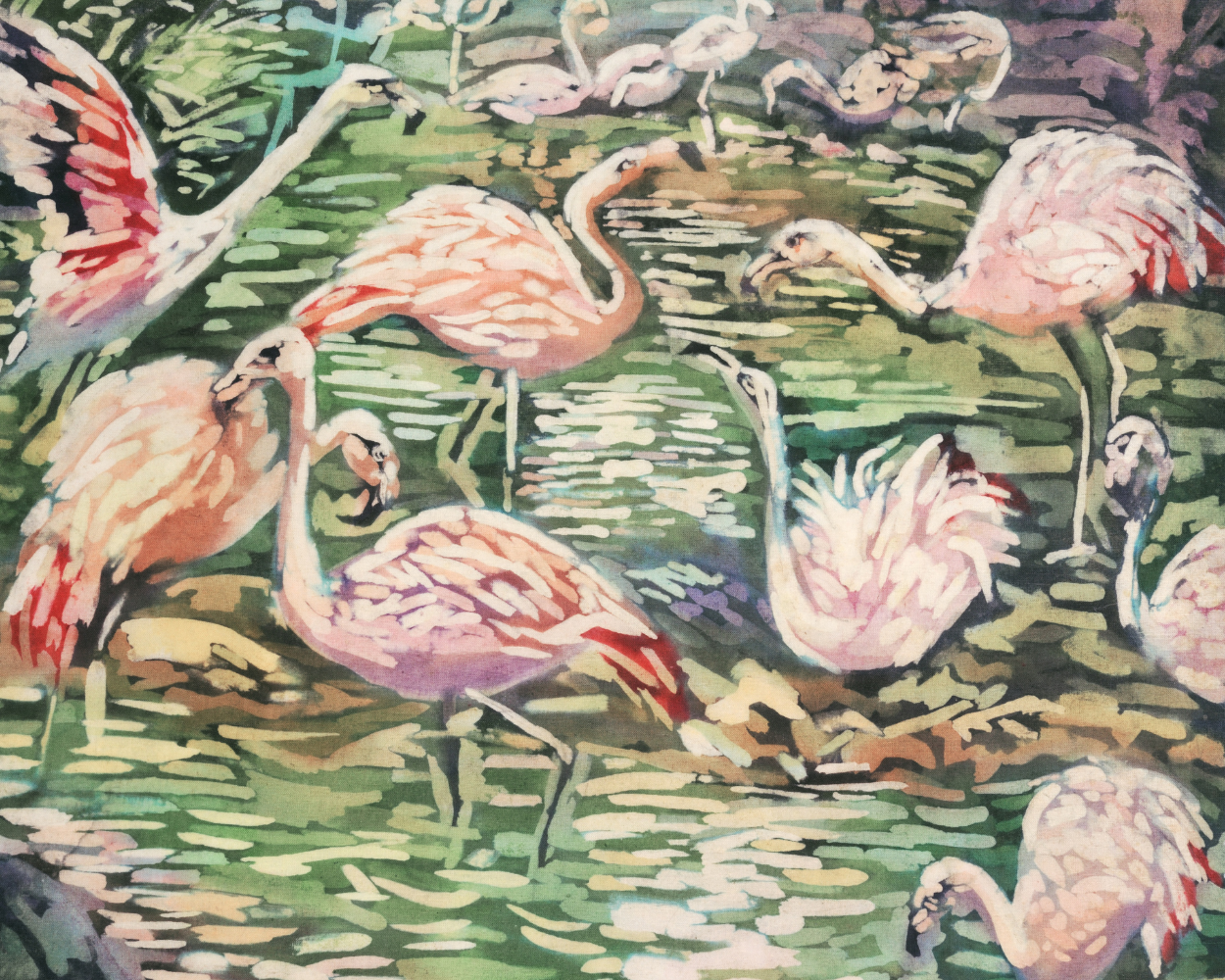
Albania, the Flamingo Revolution, and the enduring aspiration of a sustainable heritage and future
By Xhesjana Haxhiu and Elise Cuny
As Albanians take to the streets to protest the destruction of what is not only a source of national pride but also one of the Mediterranean’s most distinctive ecosystems, the Flamingo Revolution highlights the depth of public commitment to natural heritage and sustainable ways of life – two ideas that seem to hold significant appeal in the context of European Union enlargement and to serve as important drivers of its attractiveness.
A country that survived things that should have broken it
From over five centuries of Ottoman domination to Enver Hoxha’s 47 years of hermetically-sealed communist dictatorship, the Albanian language, culture and identity endured. Cultural traditions, language, oral heritage, and a distinct sense of Albanian identity persisted despite repeated attempts to suppress them.
When barbed-wire fencing appeared on the shores of Zvërnec in April 2026, Albanians knew immediately what they were looking at. For a people whose collective memory spans centuries of dispossession, the sight of a private security guard dragging a citizen inside the fencing struck a nerve with deep historical roots: the recognition of the moment when something is being taken from them.
What is at stake: Vjosa-Narta wetlands and Sazan Island
Since 1 June, thousands of Albanians have been protesting the government’s decision to hand over a vast stretch of their country’s most pristine coastline to a luxury resort project worth up to $4 billion. Backed by Jared Kushner’s Affinity Partners, alongside Qatari investors, the project would transform the Vjosa-Narta protected wetland and the island of Sazan into a high-end tourism complex, after being granted “strategic investor” status in 2024, the legal mechanism that made the land available (tourism is listed among the strategic sectors).
What captivated Ivanka Trump and Jared Kushner, however, is not an empty piece of land (nor water, where tonnes of unexploded World War II ordnance still lie submerged). Sazan Island was itself one of Hoxha’s most closely-guarded military secrets, a naval base sealed off from the Albanian people for decades in the name of the state. It is one of history’s bitterest ironies that the same island is now being sealed off again, this time for private capital. Decades apart, the instinct is the same: to decide, on behalf of others, who gets to own what.
More importantly, Vjosa-Narta is one of the last largely untouched coastal ecosystems on the Mediterranean: breeding ground for flamingos, loggerhead sea turtles, and Mediterranean monk seals. During early construction surveys in April 2026, at least one sea turtle nest was destroyed by bulldozers.
What presented itself as an ideal “strategic investment” has, in a matter of weeks, sparked mass protest and threatened an entire government.
A transgenerational, cross-border movement
The Flamingo movement cuts across every demographic line: families with young children, elderly residents, students, and professionals. It is a genuinely transgenerational refusal, shaped by converging memories of what it means to lose ecosystems, natural heritage, and a say on their own future.
These protests are quite different from the violent flare-ups of past Albanian political crises. Those marching have been handing out flowers, singing and picking up litter afterwards. They carry inflatable flamingos and signs reading “Albania is not for sale”, drawing solidarity among environmental NGOs across Europe.
The Albanian diaspora has also joined them, from Brussels to New York, under the slogan “We Have No Land To Sell.” Since the fall of communism, some 1.2 million citizens have emigrated, leaving a current population of around 2.4 million. Those who left have not let go; their presence in these protests is a reminder that Albanian identity does not stop at the border.
The EU accession’s factor
Albania submitted its formal application for EU membership in 2009 and was granted candidate status in 2014. In 2025, it opened all 33 of its EU accession negotiating chapters in just 13 months, and just before the protests began, became the second candidate country, after Montenegro, to meet the interim rule of law benchmarks. The EU’s Commissioner for Enlargement, Marta Kos told Albanian counterparts: “We are preparing a home for you in Europe”, with membership realistically possible by 2028 or 2030.
At this exact threshold, the government is handing prime protected coastline to foreign investors through opacity and disputed land titles. EU accession means rule of law, environmental protection, transparency, and democratic accountability. These norms are also increasingly “internalised” by Albanians themselves, who recognise what they represent for the defence of their rights. The Zvërnec project violates all of them simultaneously. Albania’s anti-corruption prosecutor’s office (SPAK) has since opened an investigation.
A differentiated EU normative response
The EU institutional response has been split between moderate to hardline replies. The European Commission has combined warning signals with more conciliatory positions, overall emphasising trust in Albania’s judicial institutions. This point has been reiterated by Commissioner Marta Kos over recent months, notably through references to the work of the Structure Against Corruption and Organised Crime (SPAK). As Commissioner Kos has stressed, combating corruption is also a matter of mindset—one that requires time and extends beyond legal reforms: “You can have the best legislation to fight corruption, but if corruption is accepted in the country, then you have a problem”. The European Parliament has taken a stronger stance, calling for the repeal of Albania’s 2024 amendments to the Law on Protected Areas and demanding an immediate moratorium on new permits and construction in protected areas until full compliance with EU nature protection standards is restored.
The emphasis is likewise on values. Speaking at the EU–Western Balkans Summit in Tivat, Montenegro, on 5 June, António Costa recalled that EU membership “means joining a political union built on common values and shared strategic choices.” He further stressed that accession is contingent upon “fully implementing environmental and rule-of-law standards.” Notably, EU institutions have not echoed Rama’s repeated allegations regarding hybrid threats, a framing that could have played on EU fears of existing risks.
One thing is certain: Albanian civil society demonstrates that democratic governance is a defining pillar of the EU accession process and that the aspiration for a sustainable way of life—one capable of preserving natural heritage and commons—can be as powerful a driver of European integration as promises of economic prosperity and security.
A vision of sustainable heritage that makes the EU attractive
The Flamingo Revolution reveals a citizens’ preference for a certain vision of culture rooted in sustainability and a shared understanding of what heritage is, what it means, and what responsibilities it entails for future generations. Shaped over the years through European strategies, as well as through the work of artists, cultural practitioners, and heritage professionals across the continent, this vision remains far from a forgotten cause ready to be sacrificed for short-term gains, despite recent political pushback against the Green Deal. At a time when the European Union is reflecting on its future Sustainable Tourism Strategy and shaping the next phase of the New European Bauhaus, Albania sends a clear message: ambition should not be scaled back.
Albania does not need to be the next Dubai. It needs to be the next Albania: governed with the transparency it has fought for, with its ecosystems, natural and cultural heritage protected rather than monetised, with a European future that actually reflects European values. The EU has a responsibility here too: to hold Albania to accession benchmarks and to hold itself to them. Cultural and natural sustainability are not soft conditions. They are the substance of what European integration is supposed to mean.
The views expressed in this article are personal and are not the official position of culture Solutions as an organisation.