
12 points go to… a vision of Europe (dis)united by music
By Ina Kokinova
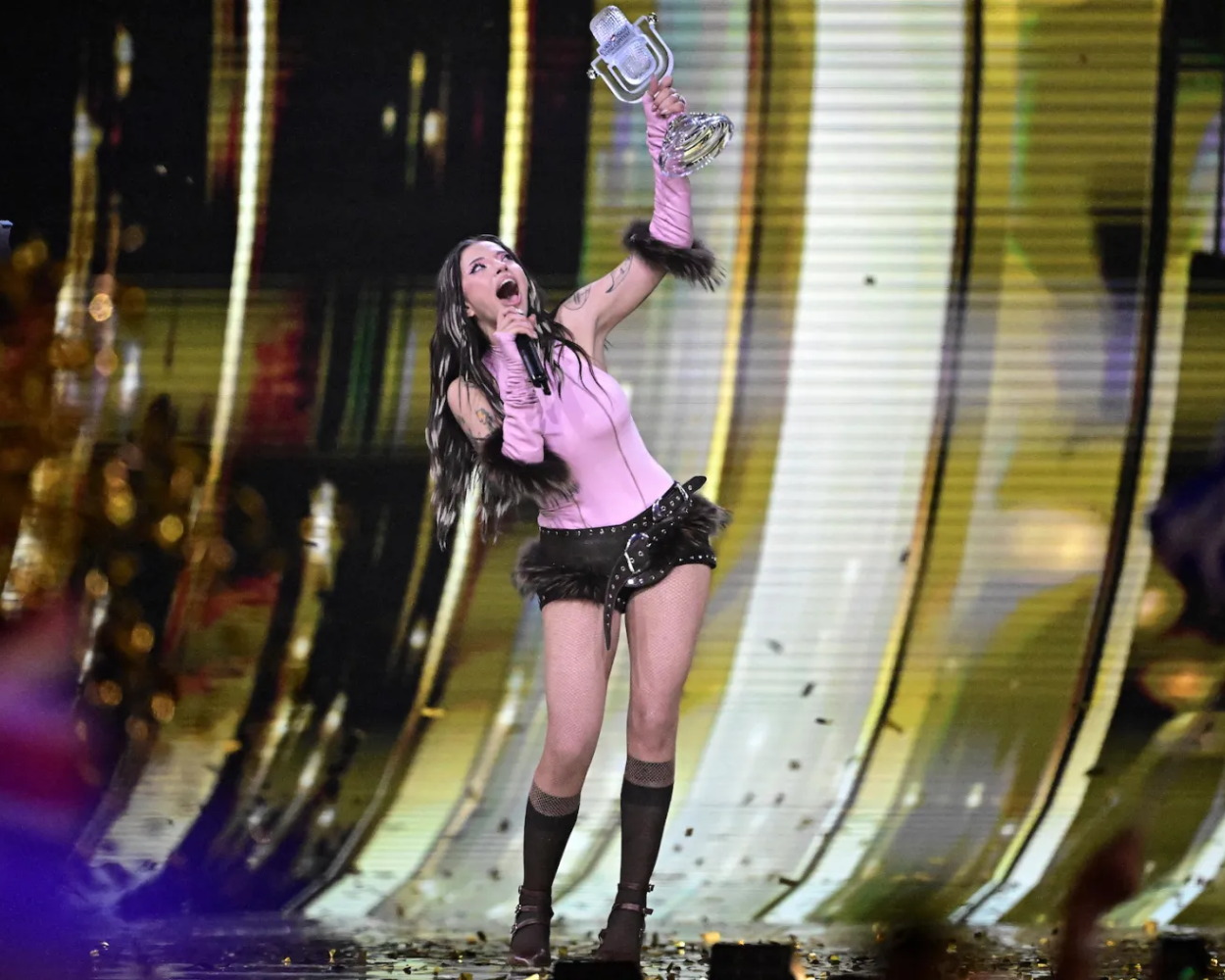
A month ago, the Eurovision 2026 Grand Final took place with a bang: Bulgaria’s “Bangaranga” snatched the first place from Israel in an edition marred by boycotts over its participation. This blog post explores how the song contest has succeeded in its mission to unite through music by bringing together people from all over the world and fostering the soft power of both EU and non-EU countries, but geopolitical tensions put in danger the reputation and even the future of the show.
United by music: broadcasting cultural diversity beyond Europe
With 150-180 million viewers globally, the Eurovision song contest is the most-watched annual music event in the world (followed by the Super Bowl Halftime Show with around 130 million, mainly in the United States). With votes by the public coming from 146 countries and territories in 2025, Eurovision’s global appeal and cultural impact is undeniable.
While Eurovision resembles the European Union’s nomenclature, the competition is held by a separate international organisation – the European Broadcasting Union (EBU). However, they share the devastation of World War II as their initial impulse, and bringing countries together as their underlying mission. Similarly to the EU, EBU grew from 8 members in 1950 to 56 countries represented nowadays, forming an alliance of 113 public service media organisations that allows diverse content to be exchanged, seen and heard in 153 languages by more than one billion people around the world. This cooperation between arms-length media actors constitutes cultural relations as the engine enabling Eurovision, even though technically the broadcasters are competing against each other in the song contest.
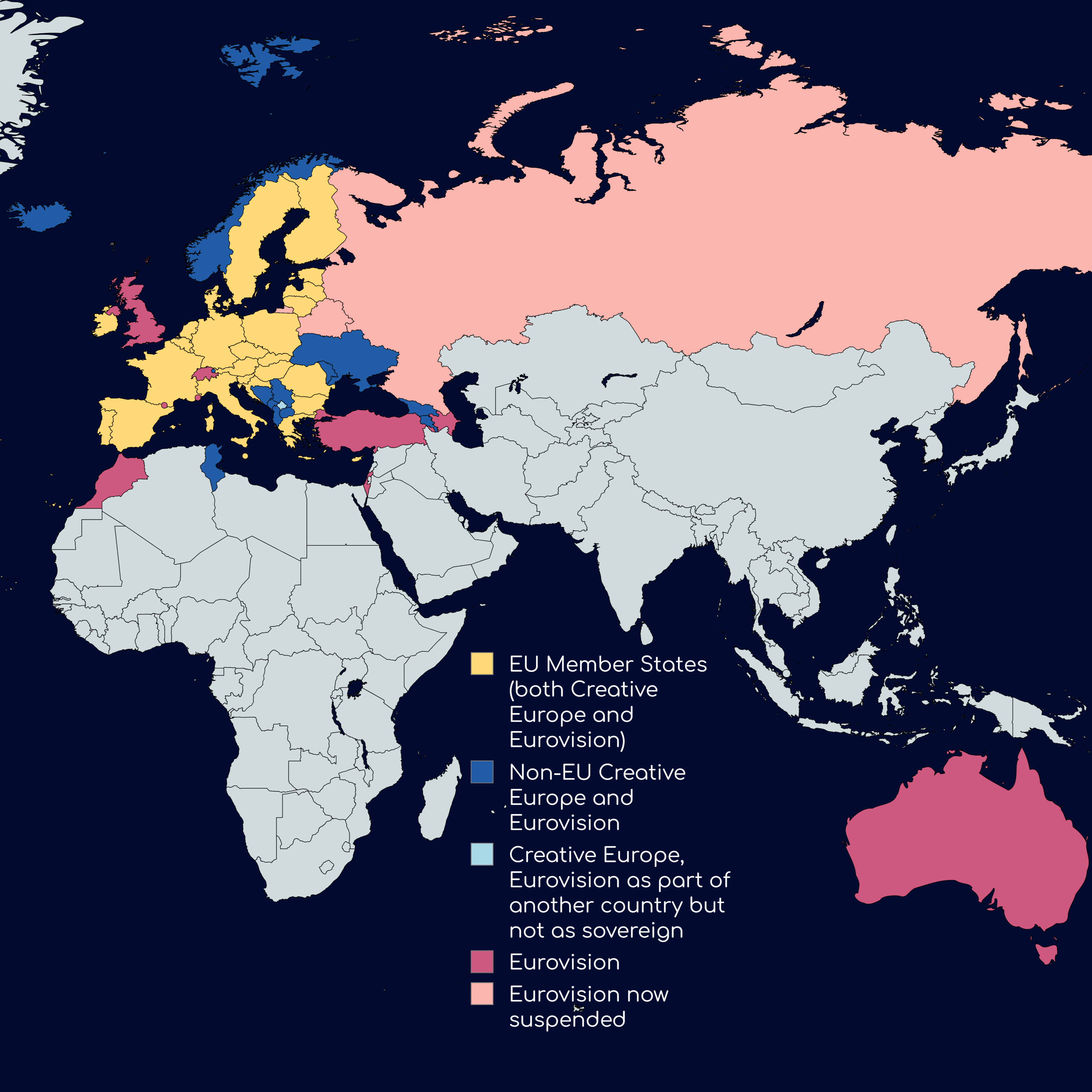
Initially inspired by Italy’s Sanremo festival, Eurovision is celebrating its 70th anniversary, taking place annually since 1956 except for 2020 due to the COVID-19 pandemic. This makes Eurovision the longest-running international music competition on television, and one of the world’s longest-running television programmes. Broadcasters from 52 countries have taken part at least once, going well beyond the EU’s Creative Europe programme currently including 14 non-EU countries. Participation by Armenia, Georgia or Israel frequently stirs confusion as to the geographical scope of “Europe”, but in fact eligibility is based on the European Broadcasting Area (EBA) as defined by the International Telecommunication Union (ITU). The only country from outside the EBA to ever participate is Australia: first invited as a one-off for the 60th edition in 2015, it has returned annually thanks to Eurovision’s large viewership in the country, where cultural proximity and shared values defy the time difference.
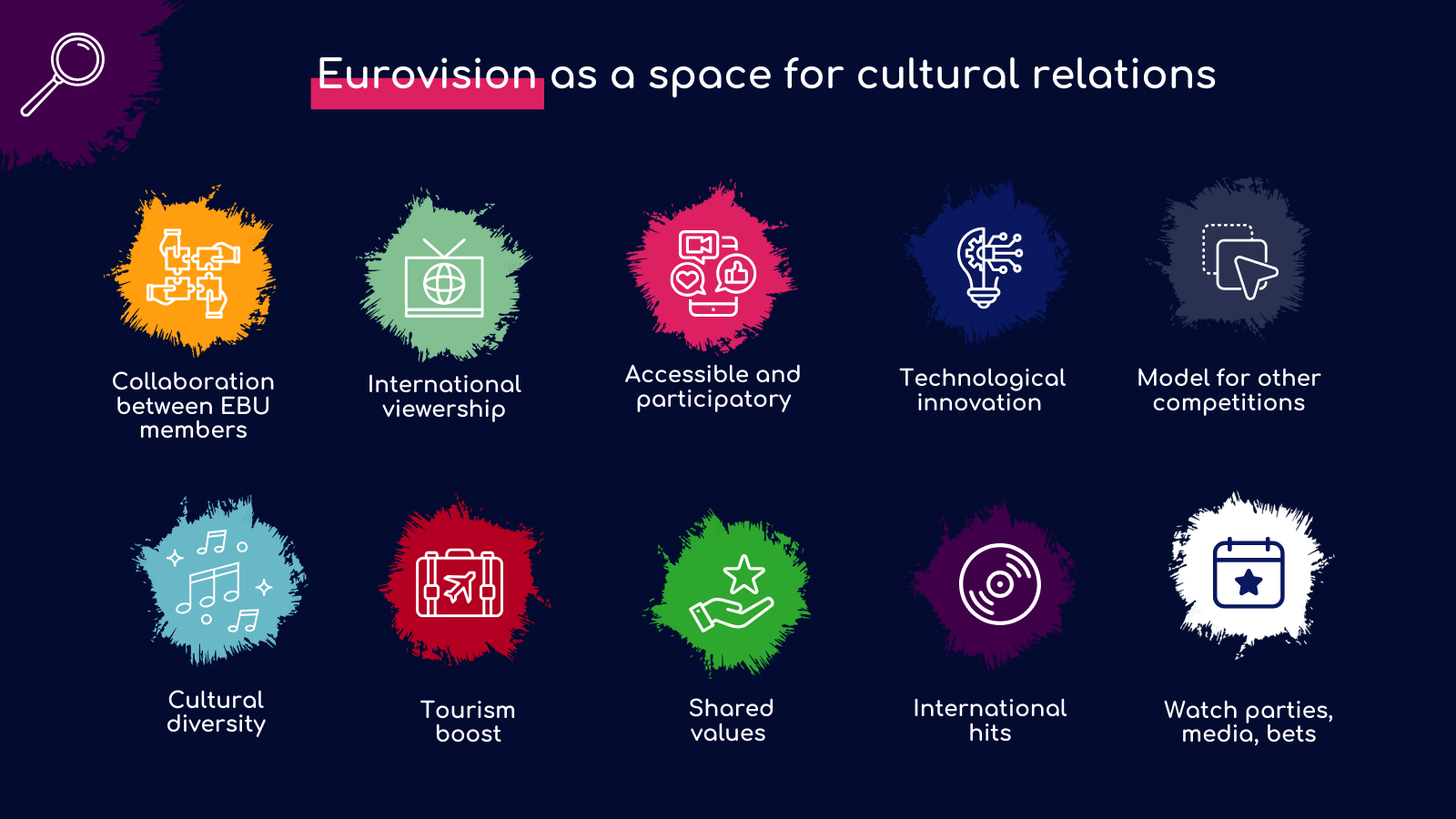
Precisely this broad participation is what makes Eurovision not just a scene for cultural diplomacy, but also a space for cultural relations. Even though the rule mandating contestants to sing in one of their country’s official languages was permanently removed in 1999, a high percentage choose to do so. While performing at least partly in English is seen as a way to appeal to a larger portion of the public, its share has decreased over the past decade as the global music industry is democratising and English is no longer the linchpin of integration and inclusion into a shared musical space. Singers’ creative freedom has led to expressions in other countries’ languages (either as a tribute like “C’est La Vie” or a parody like “Espresso Macchiato”, both in 2025), constructed languages (the first example being “Sanomi” in 2003), and curious mixtures or shoutouts to a multitude of languages (1973 “It’s Just a Game” leading with 12). The fact that the public votes for a specific song without understanding its lyrics supports both the assertion that music is a universal language, and Eurovision’s motto “United by music” (quite similar to EU’s own “United in diversity”).
Regardless of the lyrics, songs tend to include rhythms, dances or attire representative of their homeland. In addition, the presentation cards before each performance and the announcements of jury votes project a certain state image. Host city rotation (based on previous-year victory) provides another opportunity to shine under the spotlight and attract tourists. Yet, Eurovision has been since its inception a TV-first show, with complex scenography and special effects not fully appreciated by in-person attendees (around 95.000 in Vienna in 2026). With broadcasting available on YouTube, the contest ensures wide accessibility and a viewership well beyond the borders of its members. The participatory nature of the vote dating back to 1997, often appending jury results and since 2023 open to the whole world, is key to Eurovision’s attractiveness. Additional strategies to engage the public include an app, social media and a fan experience called Eurofan. And indeed, throughout the years EBU has contributed to tech innovation in the media sector, particularly via standard-setting and exchange of good practice, from live TV in the 1950s to AI now. Yet, in the era of political forces and social media polarising society and an attention scarcity induced by infinite scrolling of short-form content, finding the time and will to sit through a 4-hour spectacle bringing together millions of people offers a nostalgic sensation.
Eurovision jump-started the international career of world-famous artists like ABBA, Céline Dion or Lordi. Yet, as “Professor Eurovision” asserted, Domenico Modugno’s 1958 “Volare” -despite only finishing third- is the song that has sold most records and also had the largest cultural impact so far (measured by the number of cover versions). In some countries, representing one’s nation at the contest is the highest accolade a singer could ask for (the prize for winning San Remo in Italy, The Voice in Georgia or X Factor in Malta). Often, the winner takes over the European summer charts, and their country enjoys a short outpour of international attention and congratulations. Eurovision’s cultural impact also manifests through high media attention and multiple side-events, in addition to private watch parties. An important aspect is the representation of LGTBIQ+ themes and artists, with a first nod in 1961’s “Nous les amoureux” and the first openly transgender contestant winning in 1998 with ‘Diva’. As the queer community appropriated itself of Eurovision’s glitter as a hymn to the values of diversity and inclusion, a backlash from more conservative parts of society ensued. The international imprint of the contest itself is getting a huge boost this year with the launch of the Eurovision Asia edition. The grand final is scheduled to take place in Bangkok, Thailand in November, with a local production company and 11 broadcasters supporting EBU in its quest to adapt the European format to other cultural contexts, while avoiding the politics that have overburdened it in recent years.
Driven by geopolitics: international alliances and tensions take centre stage
Eurovision is much more than music, of course. And if this is what makes it interesting for policy-makers and wonks (see Von der Leyen and Costa’s picks), at the same time it marginalises less powerful nations: negative perception of skewed voting leading to low viewership and prohibitive production costs for participation resulting in broadcasters dropping from the contest. Power imbalance is structurally embedded in the contest, with automatic qualification to the final for the so-called ‘Big Five’ (France, Germany, Italy, Spain and the United Kingdom), similar to United Nations Security Council’s P5, but in this case based on financial contributions. Calls to reform the system have similarly been recurrent, especially from the United Kingdom, due to its negative correlation between investment and success (the rock bottom being the infamous ‘nil points’ in 2003).
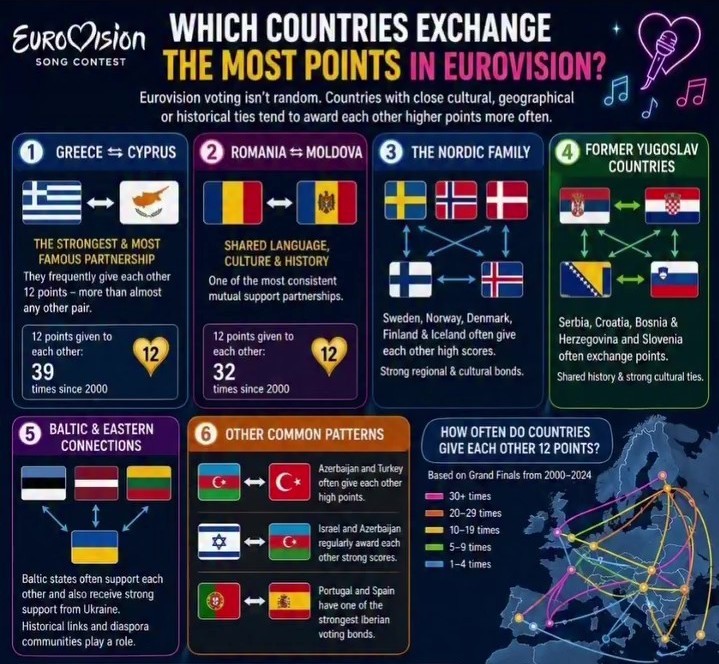
UK’s continuous scores have become less about musical quality and more about geopolitical voting blocs. Cultural relations account for the majority of voting alliances: neighbouring countries often support each other due to shared or intelligible language, similar traditions and cultural references. Moreover, historically friendly relations and strong diaspora networks drive points exchange beyond neighbourly groupings. Yet, while amusing to watch, such alliances are not sufficient to ensure victory. In fact, Ireland and Sweden hold the record for the most victories (with seven wins each), followed by France, Luxembourg, the Netherlands and the UK (with five). An oddsmaking industry is flourishing on predictions based on which song best fits the glamorous and dramatic Eurovision style, which has created an additional economic value around the contest and often correctly guessed the winner (but in 2026, Finland had been leading the odds with more than 40% only to finish sixth).
Although songs with political references are forbidden by the Eurovision rules, votes clearly reflect geopolitical considerations. Ukraine’s 2022 victory is the example par excellence, with the then-record televoting score of 439 points reflecting European solidarity in the face of Russia’s unprovoked and illegal large-scale invasion. The EBU itself had taken a position by suspending its Russian members from Eurovision in May 2022, having done the same with Belarus a year prior. In response, Russia withdrew from EBU and announced the revival of the Intervision Song Contest that had run in the Eastern bloc between 1965 and 1980. After Moscow hosting in 2025, Intervision also went global with 2026 planned for September in Riyadh, Saudi Arabia (assuming that the US-Iran war indeed halts).
This is why EBU’s choice not to expel Israel from the Eurovision song contest over its violent response to the 7 October 2023 terrorist attack has prompted accusations of double standards, not unlike those voiced against the EU’s own split on the matter. The controversy over atrocities committed in Gaza is further supplemented by years-long complaints (supported by a New York Times investigation) over Israel influencing both the televote outcome and the organisation itself via direct sponsorship. After mass public protests, an open letter from previous contestants, and failed attempts to make the EBU investigate and ban Israel, broadcasters from Spain, the Netherlands, Ireland, Iceland and Slovenia boycotted the 2026 competition, and others decided not to air Israel’s performance (Israel had previously caused boycotts by Turkey in 1979 and Morocco in 1981, accounting for 7 of the 11 official boycotts). While “boycotts of Eurovision have not ended dictatorships or wars” and risk punishing artists for their government’s actions (e.g. the Israeli singer had to rehearse singing while being booed), they are certainly bringing media attention and potentially making Israel’s projecting of soft power counterproductive. Considering 2026 boycott decisions are largely aligned with their respective governments’ position, they are likely to remain in place towards 2027 – this edition already saw the lowest number of participating countries since 2003 (35). Therefore, after swiftly denying rumours that Israel would be moved to the Asia edition to calm the tensions, the EBU must act quickly and transparently to make sure Eurovision’s 70th birthday is not its last.
Recommendations for EBU to preserve Eurovision as a platform for cultural relations, not geopolitical competition
- Act as a platform of dialogue and good-will cooperation among its members and artists, acting as mediator on the concerns Israel’s participation, and carry out the necessary reforms to regain the trust of the public and the broadcasters, including guaranteeing funding transparency and independence from sponsors’ influence on EBU decision making and Eurovision outcomes.
- Apply the lessons learnt of the European edition to the newly-launched Eurovision Asia including clear depoliticisation and transparency measures, while collaborating closely with local partners to ensure cultural sensitivity and adaptation to the context and values of the participating countries.
- Promote environmentally-sustainable production methods in line with the New European Bauhaus, enabling Eurovision to serve as a leading advocate for creative climate action.
- Expand the permission to wave the EU flag from the audience to the artists themselves, avoiding the repetition of the 2024 clash between EBU and the European Commission over the suppression of the symbol of common identity.
- Increase coordination between national broadcasters and engage with relevant institutions in Brussels.
Recommendations for EU institutions to promote music as a vehicle for European cohesion and international cultural engagement (beyond Eurovision)
- Take advantage of Eurovision’s visibility and appeal by continuing engagement in the public debate around it, and holding official events by EU Delegations around the world as a way to not only showcase the continent’s cultural diversity but also connect audiences and musicians.
- Step up efforts to promote the annual Music Moves Europe Awards, created in 2019 by the European Commission to highlight and promote the diversity of popular and contemporary music but lacking the grandeur and popularity of Eurovision, by including national broadcasters and investing in production and promotion including outside EU borders.
- Seek synergies between EBU and EU activities in support of the music sector, with particular focus on young artists, for instance by organising joint capacity building, matchmaking or exchange programmes, including in the EU neighbourhood (e.g. expanding on support to broadcasting in enlargement countries).
- Recognise the crossovers between the MEDIA and Culture strands of the Creative Europe programme (e.g. broadcasting of music and other performances or competitions), and ensure sufficient funding for international cultural relations in the 2028-2035 MFF.
Today’s World Music Day (started by France in 1982 as Fête de la Musique), celebrates unity, creativity, and cultural exchange. And this is precisely what Eurovision stands for, despite current tensions. As the largest music show, it testifies to Europe’s capability to produce world-class performance, rooted in shared values. Because listening, performing and making music transcends languages, cultures, geography and even political divisions.
Disclaimer: The author (Bulgarian) started working on this article before the 2026 Eurovision edition. She organised at her current home (Panama) her first-ever Eurovision watch party, bringing together 5 nationalities (Panamanian, Ukrainian, Italian, Romanian, Bulgarian) in an example of bottom-up cultural relations. At the same time, she was also commenting online with her Spanish friend, who introduced her to Eurovision and its politics in 2021, as well as a German one. The author did not believe her country, returning after 3 skipped editions, was capable of winning until the very last moment, despite her guests’ excitement.
Header image creadits: Getty images
The views expressed in this article are personal and are not the official position of culture Solutions as an organisation.